
The 2020 Scrum Guide conference was held at 11 pm on November 18, 2020, Beijing time. The conference lasted three hours. What did these three hours talk about? What's the highlight? Don't worry, just read this article.
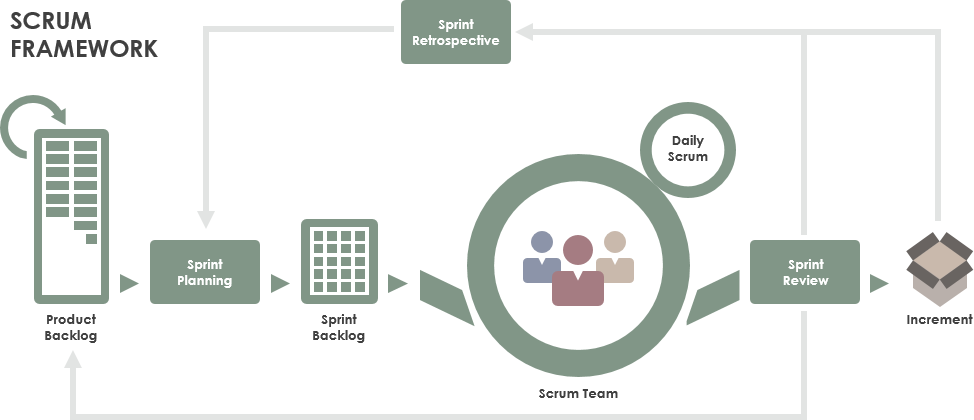
In general, the revised version of the Scrum Guide has the following advantages:
- More simplified
- More diversified
- Improve the understanding of the essence of Scrum, instead of just staying on the operable steps or processes;
- More tends to become a framework that can create results, rather than methodology.
The new version of Scrum has been streamlined a lot, and many suggestive languages and processes have been removed. It is also the streamlining of those detailed instructions, which actually brings more requirements and challenges to Scrum practitioners.
The new framework requires us to be better people. Scrum practitioners can no longer directly use Scrum as a template to apply, but really need to understand the essence of Scrum and understand the underlying design logic of Scrum. Only with a deep understanding of the framework, fully implementing the framework, and better delivery, can it bring business value to the organization.
The new version of the framework brings new opportunities. As the new version of Scrum expands to more industries, it also brings a new opportunity to friends in the non-IT industry who are interested in agility and Scrum. Putting such an adaptable "energy" into practice in different industries will deliver stronger "power" for all walks of life, and at the same time, it can bring back more successful cases to optimize and iterate again for this framework. Prepare. The road is long and long, I will search up and down!
I think this is also the original intention of Jeff and Ken, and what everyone expects!
The highlights of the new version of Scrum
Emphasize that Scrum can be applied in all walks of life The new guide describes Scrum for the first time as it can be used by all walks of life in non-IT fields and non-IT departments. This is not to say in a vacuum, but to integrate the diverse practices of people from all walks of life around the world in various industries since Scrum was founded 25 years ago. From practice, to guide practice. At the press conference, you can also see actual cases of Scrum applications from many industries, such as aerospace, medical, human resources, education, etc.
Delete or downplay the prescriptive language and reduce "speaking" The Scrum Guide aims to provide a framework, not a methodology. But in recent years, in the process of applying Scrum, people have artificially made the guideline more and more “prescriptive”. For example, such as the daily stand-up . The original Scrum guide gave a suggested way to organize meetings- three questions to team members: "What did you do yesterday?", "What did you do today?", "Are there any obstacles?". However, many teams implemented this practical recommendation as: Let team members answer these three questions one by one. In fact, this is a misunderstanding of the Scrum Guide. Not only is it not a good practice, it can even be considered an anti-pattern. In the new version of the guide, the two teachers, Jeff and Ken, formally deleted the suggested language about the three questions in the daily stand-up meeting, in order to let the team think about what is really effective for them.
Introduce product goals The previous version of the Scrum Guide already has an iteration goal (Sprint Goal), and this new version of the guide also introduces a product goal (Product Goal). The product-level goal provides the team with a larger and more valuable guide. The iterative goal of each iteration should be to make the incremental product closer to the overall product. In this way, the team can always maintain strategic focus in each iteration and move towards the right direction.
- Settle a home for product goals, iteration goals, and completion definitions The previous version of the Scrum Guide described the iteration goals and the Definition of Done, but did not really give them an identity. In other words, they are not artifacts in the full sense, but are attached to artifacts to some extent. With the introduction of product goals, the 2020 version of the guide provides a clearer description of this. Now, each of the three artifacts contains a corresponding "commitment":
For Product Backlog (product backlog), it is Product Goal;
For Sprint Backlog (iteration to-do list), it is Sprint Goal ;
For Increment (product increment), it is https://www.visual-paradigm.com/scrum/definition-of-done-vs-acceptance-criteria/. (Please note: Done is no longer quoted)
The strong association makes the "commitment" into the blood of each artifact, so that the artifact can be quantified, and the team can always focus on the same goal.
Emphasize that a team focuses on one product In the practice of Scrum in recent years, there will be "delegation" between the product manager ( Product Owner ) and the development team (Dev Team). In order to solve the problem of product manager's insufficiency, some teams have deliberately added a new role such as " Product Owner Proxy " to the team. Of course, this is an alternative plan that has to be adopted in order to solve the problems left over from history. But the new version of the Scrum Guide emphasizes the concept of a team. Product managers, Scrum Masters, and developers are just different roles in the team. Everyone is focused on the same goal, there should be no agency, there should be no team gap between "us and them", and there should be no so-called "team in a team".
Service-oriented leader becomes True Leader The new guide changes the service leader (Servant Leader) to the true leader . This change eliminates the original misunderstanding of service-oriented leadership. To give a common example, the Scrum Master in many teams is often held by younger brothers and sisters who have just graduated. They think that the work of the Scrum Master is mainly to hold meetings, make records, and report reports. Some team members also think that they do not want to do it. The trivia and chores, of course, are pushed to the Scrum Master. The new version of the Scrum Guide clearly puts forward higher requirements for the Scrum Master. The Scrum Master is no longer a small and inconspicuous role that only provides services, but a general who can "go on the battlefield with the team and win victory".
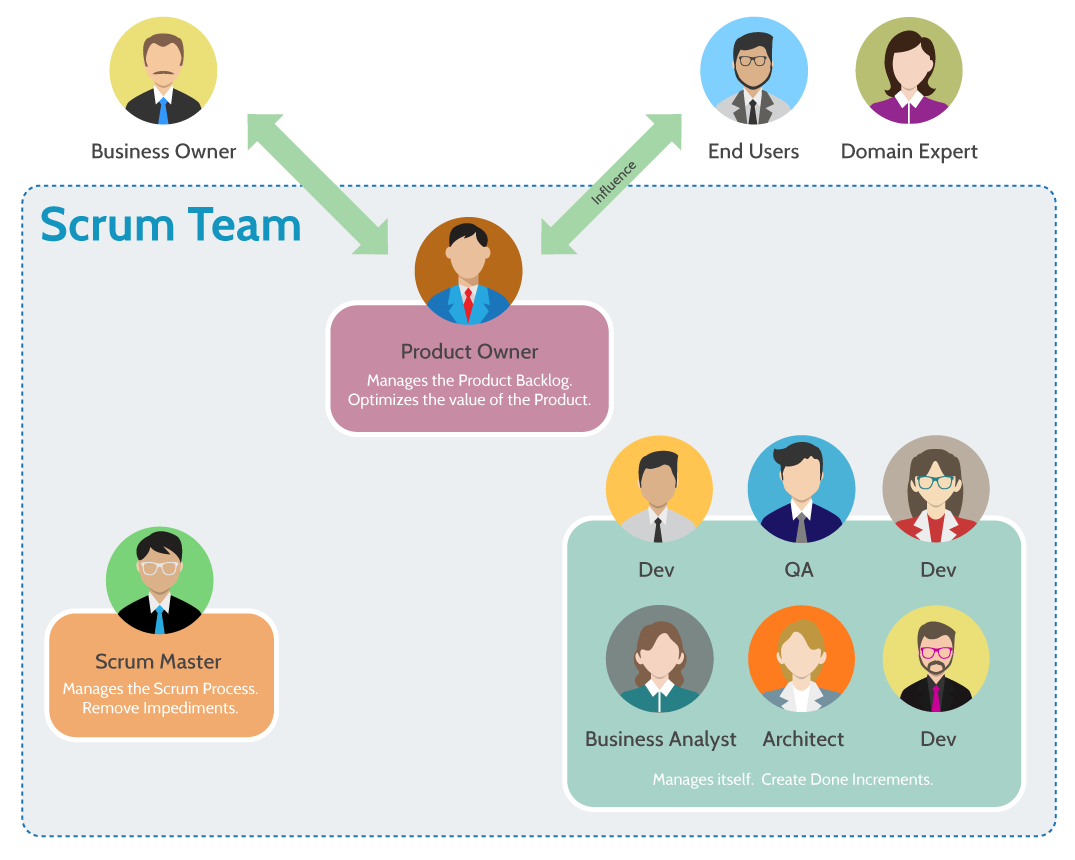
- Self-management is better than self-organization The previous version of the Scrum Guide referred to the development team as a self-organization team. As a result, many “self-organizing” teams became “unorganized” teams, and some teams even mistakenly believed that after adopting Scrum , Even the management doesn’t need it anymore.
The 2020 version of the guide emphasizes that the Scrum team should be a self-management team. Such expressions are clearer and can stimulate the team's ability and guide the team to self-organize and self-manage. Take the initiative to think about "who to choose", "how to do" and "what to do".
More Scrum Articles
- What is Scrum Team?
- What is a Self-Organizing Team in Scrum?
- How Scrum Team Works? - A Brief Guide
- Feature Team vs Component Team in Agile
- How to be a Good Product Owner in Scrum Project?
- What is Product Owner's Role in Scrum?
- Agile Development: How to Become a Qualified Scrum Master?
- What is Pig and Chicken in Scrum?
- Project Manager vs Scrum Master vs Project Owner
- What Are The Three Scrum Roles?
- What is a Scrum Master? The Role and Responsibilities
- What is Cross-Functional Team in Agile?
- As a Scrum Master, How Can You help Your Project Owner?